Getting back into it
Ibuprofen after every session: making Wednesday vs the gut and kidney cost
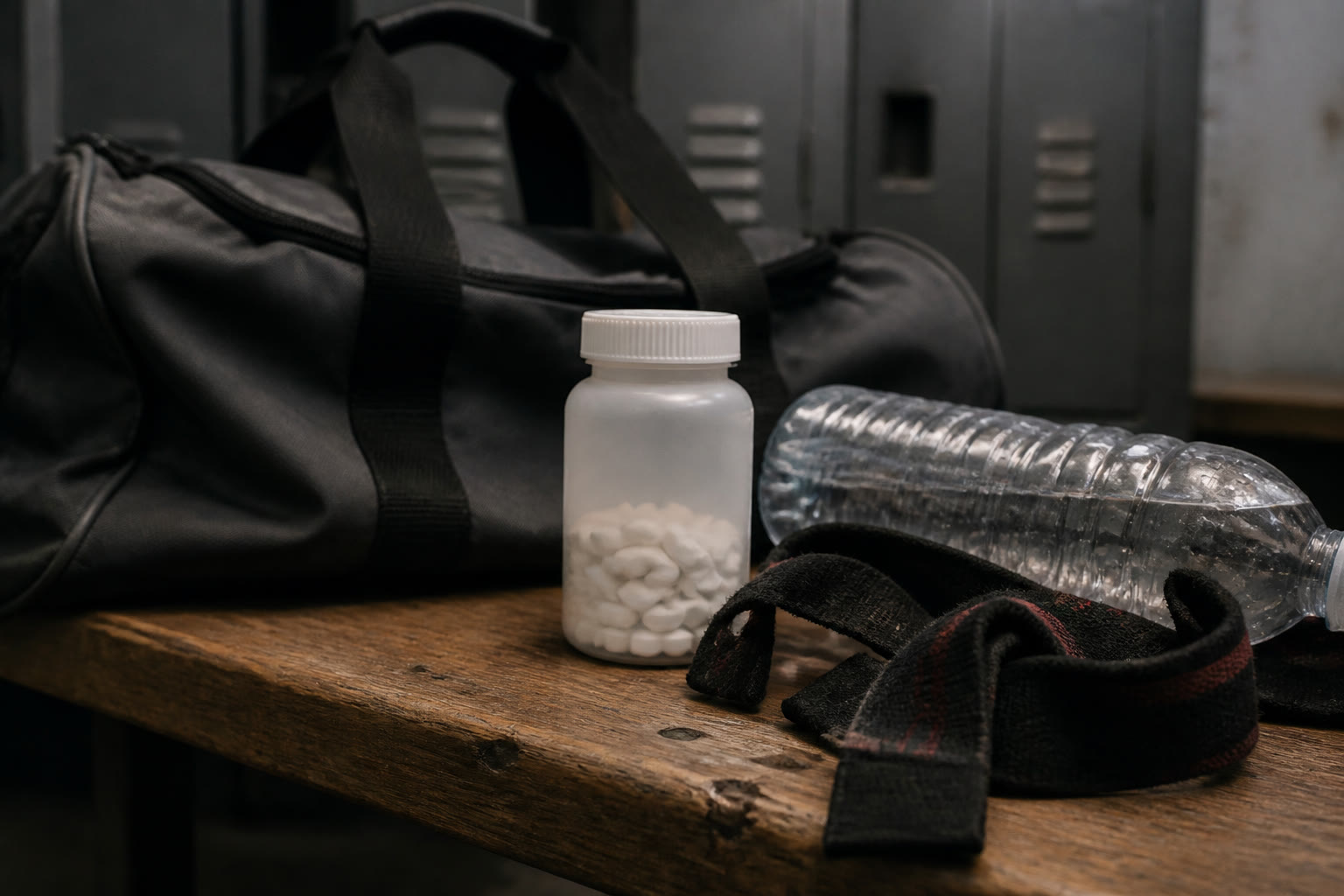
Routine post-workout NSAID so you can train through soreness is chronic drug exposure. The FDA already boxed the gut and the heart. The muscle papers split by age, and they are not a licence.
If you have ulcer history, you are on an anticoagulant or a steroid, you have had a heart attack, or your kidneys are already a conversation, this is not your article. Start at the last section and take the bottle to a clinician. I am not in a position to diagnose you.
The fight is routine ibuprofen after every session versus the gut, the kidney, the heart, and a possible — age-split — hit to muscle adaptation. Occasional OTC use for a true acute ache is the labelled use. A training system is not.
What the label already says
Prescription ibuprofen and the 200 mg Advil in the gym bag are not the same product, dose, or duration. The prescription label boxes two things. NSAIDs increase the risk of serious cardiovascular thrombotic events — myocardial infarction, stroke — which can be fatal. The risk may occur early and may increase with duration of use. Contraindicated for peri-operative pain in CABG surgery. NSAIDs increase the risk of serious GI adverse events — bleeding, ulceration, perforation of stomach or intestines — which can be fatal and can occur at any time without warning. Elderly patients are at greater risk.
The GI numbers in WARNINGS: only one in five patients who develop a serious upper GI event on NSAID therapy is symptomatic. Upper GI ulcers, gross bleeding or perforation occur in approximately 1% of patients treated for 3–6 months and about 2–4% treated for one year. Even short-term therapy is not without risk. Prior peptic ulcer and/or GI bleeding plus NSAID use: greater than ten-fold increased risk versus neither risk factor. Other GI-risk factors listed: oral corticosteroids or anticoagulants, longer duration, smoking, alcohol, older age, poor general health. Most spontaneous reports of fatal GI events are in elderly or debilitated patients. Lowest effective dose, shortest duration.
Renal toxicity is a labelled warning, not boxed. Long-term NSAIDs have resulted in renal papillary necrosis and other renal injury. In patients who depend on renal prostaglandins for perfusion, NSAIDs can cause a dose-dependent drop in prostaglandin formation and renal blood flow and precipitate overt renal decompensation. Greatest risk: impaired renal function, heart failure, liver dysfunction, those taking diuretics and ACE inhibitors, and the elderly. Discontinuation is usually followed by recovery. Advanced renal disease: treatment not recommended.
Prescription extras on the heart: new or worse hypertension. A CNT meta-analysis is cited for approximately a two-fold increase in hospitalisations for heart failure versus placebo. Post-MI observational data from the Danish National Registry: incidence of death in the first year after MI, 20 per 100 person-years in NSAID-treated versus 12 per 100 person-years in non-exposed. Concurrent aspirin plus ibuprofen increases GI risk; ibuprofen may decrease the CV benefit of aspirin. Dosing: carefully consider benefits and risks; lowest effective dose, shortest duration. Do not exceed 3200 mg total daily dose. RA/OA suggested 1200–3200 mg daily. Mild to moderate pain: 400 mg every 4 to 6 hours; in controlled analgesic trials, doses greater than 400 mg were no more effective than 400 mg. Geriatric use: caution at 65 and older. Medication Guide: talk to a healthcare provider before using OTC NSAIDs for more than 10 days.
OTC Advil Drug Facts, 200 mg. Stomach bleeding warning: chance is higher if you are 60 or older; history of ulcers or bleeding; anticoagulant or steroid; other NSAIDs; three or more alcoholic drinks every day; take more or for a longer time than directed. Heart attack and stroke warning: NSAIDs except aspirin increase risk of heart attack, heart failure and stroke; can be fatal; risk higher if you use more than directed or for longer than directed. Ask a doctor before use if the stomach-bleeding warning applies; history of heartburn; high blood pressure, heart disease, liver cirrhosis, kidney disease, asthma, or a prior stroke; taking a diuretic. Directions: smallest effective dose; adults 12 and over, 1 tablet every 4 to 6 hours; if needed, 2 tablets; do not exceed 6 tablets in 24 hours unless directed by a doctor. Stop use if pain gets worse or lasts more than 10 days.
That label does not bless daily gym-recovery use. It does not give a safe “post-workout” dose. It does not say OTC 1200 mg/day is CV-risk-free because it is “only OTC.” It does not quantify CV risk at 200–1200 mg/day. It does not mention muscle protein synthesis, hypertrophy, or DOMS. The 1% / 2–4% GI figures are NSAID-class clinical-trial experience on the Rx label, not a gym-user cohort.
The age split on muscle
In young men, max OTC ibuprofen after a single brutal eccentric bout blunted the 24-hour muscle-protein-synthesis rise and did not beat placebo on soreness. Trappe 2002: 24 males, mean age 25 ± 3, assigned to max OTC ibuprofen 1,200 mg/day (400 mg × 3), acetaminophen 4,000 mg/day, or placebo after 10–14 sets of 10 eccentric knee-extensor reps at 120% concentric 1RM. Postexercise (24 h) mixed-muscle FSR increased 76 ± 19% (P < 0.05) in placebo (0.058 ± 0.012 %/h) and was unchanged (P > 0.05) in ibuprofen (35 ± 21%; 0.021 ± 0.014 %/h) and acetaminophen (22 ± 23%; 0.010 ± 0.019 %/h). FSR n = 7 IBU / 6 PLA / 4 ACET because of sample loss. Neither drug changed whole-body phenylalanine Ra, serum CK versus placebo, or ratings of perceived muscle soreness versus placebo. Combined groups: average and maximal soreness up by day 1, peaked day 2, back to baseline by days 6–7. The authors speculate that chronic use during hypertrophy training might blunt the hypertrophic response. They did not measure hypertrophy here. A companion prostaglandin paper (Trappe 2001) showed PGF2α up 77% in placebo and unchanged in ibuprofen and acetaminophen. This does not study men 45–65. It does not prove long-term hypertrophy loss. It does not show ibuprofen “takes the edge off” DOMS in this protocol — it did not.
In medically screened older adults, 12 weeks of daily 1.2 g ibuprofen plus knee-extensor training did not inhibit, and appeared to enhance, hypertrophy versus placebo — the opposite of the young-man acute FSR paper. Trappe 2011: RCT, double-blind, 12 weeks bilateral knee extension 3×/week. Placebo n=12, age 67 ± 2 (range 60–78); acetaminophen n=11, 4 g/day; ibuprofen n=13, 1.2 g/day (400 mg × 3). Ages 60–85 inclusion. Exclusions included cardiac, orthopedic and neuromuscular bars to training, abnormal labs, arthritis, diabetes, uncontrolled hypertension, any contraindication to three months of acetaminophen or ibuprofen, chronic COX-inhibitor use, formal training, smoking. Training and drug compliance high (100% of sessions; 94% of doses by video). ANCOVA versus placebo: muscle volume increase acetaminophen 109 ± 14 cm³ (12.5%), ibuprofen 84 ± 10 cm³ (10.9%), placebo 69 ± 12 cm³ (8.6%); strength acetaminophen and ibuprofen 19 ± 2 kg versus placebo 15 ± 2 kg (P < 0.05). Untrained hamstrings did not hypertrophy. Creatinine, ALT, hematocrit: no significant change from pretraining in any group over 12 weeks (ibuprofen creatinine 0.9 ± 0.1 mg/dl throughout). Authors: “do not inhibit and appear to enhance” hypertrophy and strength in older adults. They still write that risks associated with COX inhibitors need to be considered before use in any population. This does not study 45–64-year-olds. It does not include typical midlife comorbidities — hypertension, diabetes, arthritis, chronic NSAID use were exclusions. n=13 on ibuprofen, 12 weeks, screened healthy, is not a GI-bleed or CV-event analysis. It does not refute the FDA boxed warning.
Dose matters, and it is not one protocol. Lilja 2018, opened as abstract: healthy men and women 18–35; ibuprofen 1200 mg/day n=15 versus acetylsalicylic acid 75 mg/day n=16 for 8 weeks plus supervised knee-extensor training. Quadriceps volume increase averaged across legs greater in ASA (7.5%) than IBU (3.7%; group difference 34 cm³; P=0.029). Weight-stack strength improved similarly (11–20%) across groups; flywheel strength increases generally greater in ASA. Conclusion: maximal OTC ibuprofen attenuates strength and hypertrophic adaptations over 8 weeks in young adults. It is not placebo-controlled for the NSAID — the comparator is 75 mg aspirin. Krentz 2008, opened as abstract: 12 males plus 6 females, about 24 years; 6 weeks biceps training 5 days/week, within-subject: 400 mg/day ibuprofen after one arm’s session, placebo after the other. Muscle thickness and 1RM increased similarly (ibuprofen biceps thickness 3.63 ± 0.14 to 3.92 ± 0.15 cm versus placebo 3.62 ± 0.15 to 3.90 ± 0.15 cm). Soreness elevated week 1 only, not different between arms. Moderate 400 mg/day after sessions did not impair hypertrophy or strength and did not affect soreness ratings. Neither trial is in men 45–65. They cannot be averaged into one “NSAIDs kill gains” or “NSAIDs are fine” line. The Guy Flexor reader, 45–65, sits in the hole between Trappe 2002 / Lilja and Trappe 2011.
Satellite-cell papers from the Mackey/Kjaer group conflict by model. Mackey 2007, abstract: 14 healthy male endurance athletes, 36 km run; 100 mg/day indomethacin versus placebo. NCAM+ cells +27% on day 8 in placebo (P < 0.05); unchanged at all time points in the NSAID group. Drug is indomethacin, not ibuprofen. Mikkelsen 2009, abstract: 8 young healthy males, 200 maximal eccentric contractions per leg. NSAID infused by microdialysis into vastus lateralis of one leg; other leg control. Day 8: Pax7+ cells/fiber +96% in the unblocked leg (0.14 ± 0.04 versus 0.07 ± 0.02, P < 0.05); unchanged in the NSAID-exposed leg (0.07 ± 0.01). This is local infusion, not a pill. Mackey 2016, full text: young men, 1200 mg/day ibuprofen versus placebo, two weeks before and four weeks after electrical-stimulation injury of one leg’s extensors. Authors hypothesised a negative effect based on prior work; results went the other way for this severe-injury model. Versus placebo, ibuprofen augmented ActiveNotch1+ satellite cells at 2 days (29 ± 3% versus 19 ± 2%) and Pax7+ cells/fiber at 7 days (0.16 ± 0.01 versus 0.12 ± 0.01) and expedited repair at 30 days. They explicitly contrast this with their earlier voluntary-exercise models, which had little myofiber necrosis. None of this resolves whether daily post-gym ibuprofen helps or hurts a 50-year-old’s training. None are older-adult hypertrophy trials. None are safety trials.
Gut, heart, kidney
Older age is a labelled GI-bleed amplifier. Ibuprofen is among the lower-GI-risk NSAIDs. Risk is dose-dependent and not zero at OTC doses used daily. Lewis 2002, individual-patient-data meta-analysis of three case-control studies, 2472 upper-GI-bleed cases and 5877 controls: ibuprofen OR 1.7 (95% CI 1.1–2.5) — lowest among listed NANSAIDs (diclofenac 4.9, naproxen 9.1). Dose in the week before the index: ibuprofen under 1200 mg OR 1.1 (0.6–2.0); 1200–1799 OR 1.8 (0.8–3.7); 1800 or more OR 4.6 (0.9–22.3). Class-wide risk highest in the first week of use (OR 11.7; 6.5–21.0), then 5.6 with continuing use. British arm was age 60 and over. Paracetamol was not associated with UGIB at any dose in this analysis. Concurrent use of more than one NANSAID substantially increased risk. Lewis does not prove OTC 400 mg after a workout is GI-safe; the under-1200 OR 1.1 confidence interval crosses 1.0 — underpowered at that slice — and first-week class risk is highest.
AGS 2023 Beers Criteria, Table 2: non-COX-2-selective oral NSAIDs including ibuprofen — increased risk of GI bleeding or peptic ulcer disease in high-risk groups, including those over 75 or taking corticosteroids, anticoagulants, or antiplatelet agents; PPI or misoprostol reduces but does not eliminate risk. Repeats the ~1% (3–6 months) / ~2–4% (1 year) ulcer/bleed/perforation figures. Also can increase blood pressure and induce kidney injury; risks are dose-related. Recommendation: avoid chronic use unless other alternatives are not effective and the patient can take a gastroprotective agent. Strength: Strong; evidence: Moderate. Also: avoid short-term scheduled use combined with steroids, anticoagulants or antiplatelets unless alternatives fail and gastroprotection is used. Table 3: history of gastric or duodenal ulcers — avoid non-COX-2 NSAIDs unless alternatives fail plus gastroprotection. Table 6: NSAIDs if CrCl under 30 mL/min — Avoid (may increase AKI risk); Strong. Heart failure: NSAIDs and COX-2 inhibitors listed among drugs that may exacerbate HF. Beers is written for older adults, typically 65 and over, not every 45-year-old. It is still the nearest explicit “chronic NSAID” geriatric rule.
CNT Collaboration 2013, opened as PubMed abstract (full Lancet PDF did not load): 280 trials, NSAID versus placebo, 124,513 participants. Ibuprofen significantly increased major coronary events (RR 2.22, 95% CI 1.10–4.48; p=0.0253) but not the composite major vascular events (1.44, 0.89–2.33). Heart failure risk roughly doubled by all NSAIDs. Upper GI complications with ibuprofen RR 3.97 (2.22–7.10). Interpretation as printed: vascular risks of high-dose diclofenac, and possibly ibuprofen, are comparable to coxibs. Absolute example given for coxib or diclofenac, not ibuprofen specifically: 3 extra major vascular events per 1000 patients per year. The abstract does not state the ibuprofen milligram dose used in the contributing trials. I am not inventing 2400 mg. CNT does not isolate post-exercise use.
Kidney: labelled prostaglandin/perfusion warning. Lipman 2017, opened as abstract: multisite double-blind RCT in 50-mile (80 km) desert ultramarathons; ibuprofen 400 mg every 4 hours versus placebo. n=89 (47% ibuprofen). Overall AKI 44%. ITT: 22/ibuprofen (52%) versus 16/placebo (34%) developed AKI (18% difference, 95% CI −4% to 41%; OR 2.1, 0.9 to 5.1); NNH 5.5. Non-inferiority margin was 15%; authors: increased AKI rates, not statistically inferior to placebo by a small margin. Greater weight loss associated with more AKI. Conclusion: consideration before ingesting NSAID during endurance running as it could exacerbate renal injury. This is 50-mile desert racing, not a 45-minute gym session. The primary non-inferiority test did not meet conventional statistical separation. It is not a creatine study. A PubMed and web search for a primary RCT combining creatine with ibuprofen for kidney outcomes opened none. I will not invent a synergistic kidney claim.
For acute soft-tissue pain, Cochrane 2015 does not show NSAIDs beat paracetamol. Sixteen trials, 2144 participants, mostly young adults, acute sprain/strain/contusion within 48 hours — not gym DOMS. NSAID versus paracetamol: lack of clinically important pain differences; low-quality evidence of more GI adverse events with non-selective NSAID versus paracetamol (13 more per 1000, 95% CI 0 to 35). Hasson 1993, n=5 per arm, called a preliminary investigation: prophylactic 400 mg TID starting 4 hours before an eccentric bout cut soreness perception 40–50% and torque decline at 24 hours; both ibuprofen arms less soreness and torque decline at 48 hours versus placebo/control; no difference in CK. Trappe 2002: no soreness benefit versus placebo at max OTC dose after a much harder eccentric protocol. Krentz: 400 mg post-session did not change soreness versus the placebo arm. Hasson cannot carry a “ibuprofen fixes DOMS” headline. No Cochrane review dedicated to NSAIDs for DOMS was opened. The 2020 update of the soft-tissue review was not opened.
What I would actually do
Do not use ibuprofen after every session as a training system. That is chronic NSAID exposure. FDA: lowest dose, shortest time. OTC label: stop if pain lasts more than 10 days unless a clinician directs otherwise. Beers: avoid chronic oral NSAIDs in older adults unless alternatives fail and a gastroprotective agent is on board. Occasional OTC use — 200–400 mg, not stacking toward 1200 mg “because it’s OTC” — for a true acute ache is the labelled use, not a hypertrophy hack. It is not shown to reliably kill DOMS (Trappe 2002) and it is not required for muscle growth (placebo groups still gained).
After 45, and especially approaching 60, the cost side is the one with hard labels: GI bleed risk rises with age; the CV boxed warning applies to the class; kidney risk rises if you are dehydrated, on an ACE inhibitor, ARB or diuretic, or CrCl is low. A man on blood-pressure meds is closer to the FDA “greatest renal risk” list than to Trappe’s 2011 screened volunteers. Do not use NSAIDs to mask soreness so you can hit the same muscle again. That is the opposite of the Rx instruction. Acetaminophen is not a free pass for adaptation — Trappe 2002 blunted FSR too — and 4 g/day is its own hepatotoxicity problem. Cochrane only says NSAIDs are not clearly better than paracetamol for acute soft-tissue pain. Prescription 600–800 mg tablets and 2400–3200 mg/day arthritis regimens are not gym products. CNT’s ibuprofen coronary signal sits in that high-dose RCT world.
What I will not dress up. “NSAIDs kill your gains” as a universal. False in Trappe 2011 older adults; dose- and age-specific in the young. “Ibuprofen is the safest NSAID so daily Advil is fine.” Lowest GI OR in Lewis is not zero risk, and FDA still boxes GI and CV for the molecule. “Trappe 2011 means men over 45 should take 1200 mg/day to beat sarcopenia.” That trial excluded the comorbidities that define this readership’s risk, lasted 12 weeks, and the authors still warned about COX-inhibitor risks. Any creatine–ibuprofen “nephrotoxic stack” number. No combination primary source was opened.
Do you need to buy anything
No. Soreness after a hard session is not a shopping list. If an acute ache is bad enough that you want a tablet, the labelled OTC product is already in the house for most people, at 200–400 mg, not a 10-day training system. I am not putting a shop link under a boxed warning.
When this is not the article
Pain that lasts, ulcer history, anticoagulant or antiplatelet or steroid use, prior MI, heart failure, CKD, uncontrolled blood pressure, asthma that NSAIDs have already bothered, or black stools and coffee- ground vomit, is a clinician conversation, not a bottle in the gym bag. I am not in a position to diagnose you. A GP will get further with that list in ten minutes than I can here.
How I checked this
Kin reviewed this piece on 2 September 2026, against the primary records rather than summaries of them. Nothing here about the body was written before that review, and where Kin's ruling and a seller's claim disagree, Kin wins.
- Established evidence Prescription ibuprofen label (400/600/800 mg): boxed CV thrombotic events and boxed GI bleed/ulcer/perforation; renal injury in WARNINGS, not boxed; 1% at 3–6 months and 2–4% at 1 year for ulcers/bleed/perforation; >10-fold if prior ulcer/bleed; max 3200 mg/day; 400 mg no more effective than 400 mg in analgesic trials; Medication Guide >10 days OTC → clinician — DailyMed Rx label. OTC Advil Drug Facts (200 mg, NDA 018989): stomach-bleeding warning higher if age 60+; heart-attack and stroke warning; max 6 tablets/24 h unless a doctor directs; stop if pain lasts >10 days — DailyMed OTC Advil.
- Early research Trappe TA et al. Am J Physiol Endocrinol Metab. 2002;282:E551–E556. Young men, mean 25 ± 3. Max OTC ibuprofen 1,200 mg/day after eccentric bout: 24-h mixed-muscle FSR up 76 ± 19% in placebo, unchanged in ibuprofen (35 ± 21%) and acetaminophen (22 ± 23%). No soreness benefit vs placebo. FSR n=7/6/4 after sample loss. DOI 10.1152/ajpendo.00352.2001, opened PDF.
- Early research Trappe TA et al. Am J Physiol Regul Integr Comp Physiol. 2011;300:R655–R662. Screened older adults 60–85; 12 weeks 1.2 g/day ibuprofen + knee-extensor training. Muscle volume +84 ± 10 cm³ (10.9%) vs placebo +69 ± 12 cm³ (8.6%); strength 19 ± 2 vs 15 ± 2 kg. Creatinine 0.9 ± 0.1 mg/dl throughout. Excluded typical midlife comorbidities. Authors still flag COX risks. DOI 10.1152/ajpregu.00611.2010, opened PDF (PMC3064281).
- Early research Lilja M et al. Acta Physiol (Oxf). 2018;222(2):e12948. Ages 18–35; 1200 mg/day ibuprofen vs 75 mg aspirin, 8 weeks. Quadriceps volume +3.7% vs +7.5% (34 cm³; P=0.029). Opened as abstract. DOI 10.1111/apha.12948, PMID 28834248. Krentz JR et al. Appl Physiol Nutr Metab. 2008;33:470–475. ~24 yr; 400 mg/day after one arm’s session vs placebo on the other; thickness and 1RM similar; soreness not different. Opened as abstract. DOI 10.1139/H08-019, PMID 18461099.
- Early research Mackey AL et al. J Appl Physiol. 2007;103:425–431. Indomethacin 100 mg/day, not ibuprofen; NCAM+ +27% day 8 in placebo, unchanged on NSAID. PMID 17463304, DOI 10.1152/japplphysiol.00157.2007. Mikkelsen UR et al. J Appl Physiol. 2009;107:1600–1611. Local NSAID infusion; Pax7+ +96% unblocked leg, unchanged NSAID-exposed. PMID 19713429 (PMC3774508). Mackey AL et al. FASEB J. 2016;30:2266–2281. 1200 mg/day ibuprofen after electrical-stimulation injury expedited regeneration vs placebo. DOI 10.1096/fj.201500198R (PMC4871801).
- Established evidence Lewis SC et al. Br J Clin Pharmacol. 2002;54:320–326. Ibuprofen UGIB OR 1.7 (1.1–2.5); <1200 mg OR 1.1 (0.6–2.0); ≥1800 OR 4.6 (0.9–22.3); class-wide first-week OR 11.7. DOI 10.1046/j.1365-2125.2002.01622.x (PMC1874428). AGS 2023 Beers Criteria. J Am Geriatr Soc. 2023;71:2052–2081. Avoid chronic oral NSAIDs unless alternatives fail and gastroprotection is used (Strong, Moderate). Avoid if CrCl <30. DOI 10.1111/jgs.18372 (PMC12478568). CNT Collaboration. Lancet. 2013;382:769–779. Opened as abstract: ibuprofen major coronary events RR 2.22 (1.10–4.48); upper GI RR 3.97 (2.22–7.10); HF roughly doubled. Milligram dose in contributing trials not stated in the opened abstract. PMID 23726390 (PMC3778977), DOI 10.1016/S0140-6736(13)60900-9.
- Early research Lipman GS et al. Emerg Med J. 2017;34:637–641. 50-mile desert ultramarathons; ibuprofen 400 mg q4h vs placebo. AKI 52% vs 34% (OR 2.1, 0.9 to 5.1); NNH 5.5; primary non-inferiority not conventionally separated. Opened as abstract. PMID 28679502, NCT02272725, DOI 10.1136/emermed-2016-206353. No opened primary source on ibuprofen plus creatine.
- Established evidence Jones P et al. Cochrane Database Syst Rev. 2015;(7):CD007789. NSAIDs vs paracetamol for acute soft-tissue injury: no clinically important pain difference; more GI events with non-selective NSAID (13 more per 1000). Not gym DOMS. PMID 26130144, DOI 10.1002/14651858.CD007789.pub2. Hasson SM et al. Med Sci Sports Exerc. 1993;25:9–17. n=5 per arm; preliminary. PMID 8423760.
- Guy's opinion That a man 45–65 should not make ibuprofen a training system, and that Trappe 2011 is not a licence for unsupervised 1200 mg/day in people with the comorbidities that trial excluded. The labels and the papers are above. Applying them to your Wednesday is the guess.
What I don't know: there is no opened RCT of daily post-workout ibuprofen in men 45–65 measuring both hypertrophy and GI/renal/CV outcomes. Lilja and Krentz full texts did not load; numbers are from opened abstracts. CNT ibuprofen milligram dose in contributing trials is not in the opened abstract — I did not invent 2400 mg. Lipman full text timed out. Cochrane 2020 update of the soft-tissue review was not opened. No dedicated Cochrane review of NSAIDs for DOMS was opened. No primary creatine-plus-ibuprofen kidney paper was opened; I will not dress up gym-bro folklore as a citation. Satellite-cell literature contradicts itself by injury severity and by drug/route.